How to Prepare for Finals Without Cramming: The Complete Student Guide
Learn how to prepare for finals without cramming using spaced repetition, active recall and a proven 3-week study plan backed by cognitive science.
 Written by Hamza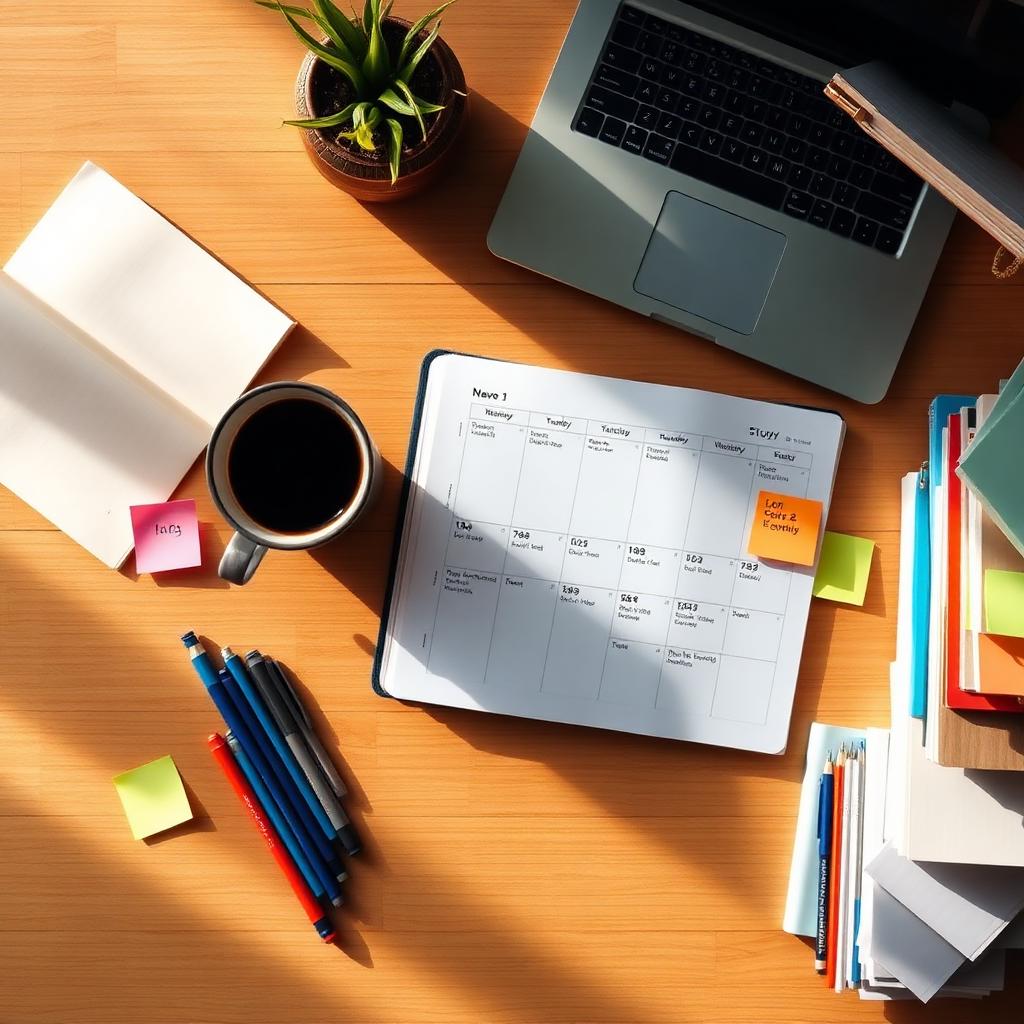
The short answer: To prepare for finals without cramming, start studying two to three weeks early using spaced repetition and active recall, break your material into a daily study schedule, prioritize sleep, and test yourself instead of re-reading. Research shows this approach can improve long-term retention by up to 200% compared to cramming — while actually reducing the total hours you study.
Now let's unpack exactly how to do it.
It's 11 PM the night before your final. You're surrounded by textbooks, cold coffee, and three weeks of material you're trying to absorb in one sitting. Cramming feels productive — everything seems to click into place, and by midnight you feel ready.
Then you sit down for the exam and half of it is gone.
This isn't bad luck, and it isn't a lack of intelligence. It's the predictable result of a study method that over 140 years of cognitive science has consistently shown to be one of the least effective ways to learn. The good news: the alternative isn't studying more. In many cases, it's studying less — just spread out and structured differently.
This guide walks you through exactly how to prepare for finals without cramming, backed by real research, with a practical week-by-week plan you can start using today. We'll also point you to free tools at StudyZoneHub that make the whole system easier to run.
Why Cramming Fails (The Science)
Cramming fails because your brain forgets information almost as fast as you absorb it — unless that information is reviewed over spaced intervals. This is one of the oldest and most replicated findings in psychology.
In 1885, German psychologist Hermann Ebbinghaus ran the first rigorous experiments on memory and forgetting. He discovered what's now called the forgetting curve: without review, we forget roughly 50% of new information within an hour, and up to 90% within a week. Cramming loads information into short-term memory right before it begins falling off this cliff.
Spaced study does the opposite. By reviewing material at intervals over days and weeks, you interrupt the forgetting curve each time — and the memory decays more slowly after every review, eventually becoming close to permanent.
The size of this difference is striking. A widely cited analysis of retention found that students who crammed retained only around 27% of course material long after the exam, while students who spaced their learning retained roughly 82%. As cognitive scientist Nate Kornell demonstrated in a 2009 study on flashcard learning, spacing was more effective than cramming — that is, massing study on the last day before the test.
The Cramming Paradox
Here's the twist that traps most students: cramming feels more effective than it is. When you cram, information becomes temporarily familiar. You recognize it easily, and that familiarity creates a false sense of mastery. Psychologists call this the fluency illusion.
The evidence for this illusion is remarkable. In Kornell's flashcard research, spacing was more effective than massing for 90% of the participants, yet after the first study session, 72% of the participants believed that massing had been more effective than spacing. In other words, the technique that worked better felt worse — so most students abandoned it.
This is why so many hardworking students underperform. They trust the comfortable feeling of familiarity over the uncomfortable effort of genuine recall. And recognition (seeing something and thinking "yes, I know this") is not the same as recall (producing the answer from a blank page under exam pressure).
The 6 Principles of Cram-Free Finals Prep
Before the week-by-week plan, here are the six evidence-based principles the whole system rests on. Everything else follows from these.
- Start early. Spacing only works if you give it time. Two to three weeks is the sweet spot for most finals.
- Space your reviews. Review each topic multiple times across days, not all at once.
- Test yourself (active recall). Retrieving information builds far stronger memory than re-reading it.
- Interleave subjects. Mix topics rather than studying one for hours straight.
- Protect your sleep. Sleep is when memories consolidate. Sacrificing it undermines everything else.
- Manage stress and energy. A calm, rested brain retrieves information far better than a panicked, exhausted one.
Let's turn these principles into an actual plan.
The Week-by-Week Finals Plan (No Cramming Required)
Here's a concrete, three-week schedule you can adapt to your own exams. The whole point is to spread the work so no single day is overwhelming — and so every piece of material gets reviewed multiple times before the exam.
Three Weeks Out: Organize and Plan
Your goal this week: know exactly what you need to study and when.
- Gather everything. For each exam, collect your syllabus, notes, past assignments, and any practice materials. Identify exactly what the final covers.
- Find out what's weighted. Check how much the final is worth and which topics carry the most marks. Use the Final Grade Calculator at StudyZoneHub to see exactly what score you need on each final to hit your target grade — this tells you where to focus your energy.
- Build a study calendar. Divide your material across the next three weeks, assigning specific topics to specific days. Spread each subject across multiple days rather than blocking it into one.
- Do a diagnostic. For each subject, spend 20 minutes writing down everything you already know from memory (a technique called the blurting method). The gaps show you where to start.
Two Weeks Out: First Pass + Active Recall
Your goal this week: learn the material once, then immediately start testing yourself on it.
- Study in focused blocks. Work through your material in 25-minute focused sessions using the Pomodoro Timer, with 5-minute breaks. Most people can't concentrate hard for hours straight, so short sprints keep you sharp.
- Turn notes into questions. As you study each topic, convert it into questions you can quiz yourself on later. If your notes are messy, revisit our guide to the 10 best note-taking methods first.
- Make flashcards for key facts. Use the Flashcard Generator to turn definitions, formulas, and key concepts into cards. Flashcards are active recall in its simplest form.
- Test, don't re-read. After studying a topic, close everything and try to recall it. This single shift is the highest-leverage change you can make.
One Week Out: Spaced Review + Practice Exams
Your goal this week: cycle back through everything and practice under real conditions.
- Review on a spaced schedule. Revisit each topic you studied last week. Because you're recalling right before you'd forget, these reviews are fast and strengthen the memory each time.
- Do full practice exams. Sit past papers under timed, no-notes conditions. This is the single best predictor of exam readiness — it forces retrieval and reveals exactly where you're still weak.
- Keep an error log. Every question you get wrong goes in a list. Those errors are your personalized study plan for the final days.
- Interleave your subjects. Instead of one subject per day, mix two or three. Research shows this "interleaving" builds stronger, more flexible knowledge than studying one topic in a long block.
The Final Days: Light Review + Rest
Your goal: consolidate, don't cram.
- Review your error log and flashcards — the specific things you keep getting wrong. Don't try to learn new material now.
- Do one final light pass over your summaries and key concepts.
- Prioritize sleep. This is non-negotiable, and here's why.
Why Sleep Beats an All-Nighter (Every Time)
Pulling an all-nighter before a final almost always lowers your score, because sleep is when your brain converts what you studied into lasting memory. This process is called memory consolidation, and skipping sleep short-circuits it.
The research here is unambiguous. A comprehensive review of the science concluded that both total sleep deprivation and partial sleep loss significantly impair memory tasks performance and the ability to form new memories. Crucially, neuroimaging studies show that sleep deprivation after learning crucially affects the long-term restructuring of memories in the brain.
In plain terms: everything you studied during the day gets filed into long-term memory while you sleep. Cut the sleep, and you cut the filing. As one medical exam-prep guide puts it, sleep debt should be treated as a direct hit to exam performance, not a lifestyle issue.
The trade is almost always negative. You gain a few hours of exhausted cramming, but you lose retention, attention, and emotional regulation the next day — exactly when you need all three.
Practical sleep rules for finals week:
- Aim for 7–9 hours the night before every exam.
- Keep a consistent wake time across finals week — don't shift your schedule wildly.
- Stop caffeine early enough that it doesn't wreck your sleep onset.
- If you're short on time, a 20–30 minute nap restores alertness far better than another hour of foggy studying.
The Study Techniques That Actually Work
Not all study time is equal. These are the highest-return techniques, ranked by how strongly the research supports them.
1. Active Recall (Retrieval Practice)
Active recall means testing yourself instead of reviewing — and it's the most effective study technique in cognitive science. Every time you pull information out of memory, you strengthen the pathway to it.
The landmark demonstration came from researchers Henry Roediger and Jeffrey Karpicke, whose work established what's now called the "testing effect": students who studied by testing themselves retained dramatically more a week later than those who simply re-read the same material. Close your notes, write down what you remember, then check. That's the whole method.
2. Spaced Repetition
Spaced repetition means reviewing material at increasing intervals rather than all at once. It's the direct antidote to the forgetting curve. Study a topic today, review it in two days, then a week, then two weeks. Each review takes less time because the memory is getting stronger. Combined with active recall, this is the single most powerful study system available.
3. Practice Testing
Doing past papers under exam conditions is active recall with a built-in structure. It reveals the exact format you'll face, forces retrieval, and — through your mistakes — shows you precisely what to study next. Few things predict exam readiness better.
4. Interleaving
Instead of studying one subject in a long block, mix two or three. It feels harder, but that difficulty is the point — your brain has to actively identify what type of problem it's facing each time, which builds more flexible, durable knowledge.
5. The Feynman Technique
Explain a concept out loud, in simple language, as if teaching a child — without your notes. The moment you get stuck is the moment you've found a gap. It's one of the fastest ways to expose what you only think you understand.
How to Manage Finals Stress
A calm brain remembers better than a panicked one, so managing stress isn't a luxury during finals — it's part of the strategy. High stress impairs the very memory retrieval you need on exam day.
The biggest stress-reducer is, ironically, the plan itself. Most finals anxiety comes from uncertainty — not knowing whether you've done enough. When you have a clear week-by-week schedule and you can see your progress, that uncertainty drops dramatically.
A few more evidence-aligned tactics:
- Break work into small wins. "Study for finals" is paralyzing. "Review 20 biology flashcards" is doable. Small, completed tasks build momentum and reduce overwhelm.
- Use your calculated targets to right-size your effort. Knowing you need a 74% on a final — not a 95% — is genuinely calming. The Final Grade Calculator turns vague anxiety into a specific, often reassuring number.
- Move your body. Even a short walk between study blocks lowers stress hormones and improves focus.
- Protect sleep — chronic sleep loss amplifies anxiety, creating a vicious cycle.
Common Finals Prep Mistakes to Avoid
Even with a good plan, these mistakes quietly undermine students every year.
- Re-reading instead of self-testing. Re-reading feels productive because the material grows familiar. But familiarity isn't recall. Always close the book and test yourself.
- Studying only what you already know. It feels good to review material you've mastered. It's also a waste. Focus on your weak spots — that's where the marks are.
- Ignoring the syllabus weighting. Spending equal time on a topic worth 5% and one worth 30% is a strategic error. Prioritize by weight.
- Pulling all-nighters. Covered above, but it bears repeating: sacrificing sleep to study more is a losing trade nearly every time.
- Marathon study sessions. Six straight hours produces diminishing returns fast. Focused sprints with breaks beat exhausting marathons.
- Passive highlighting. A beautifully highlighted textbook looks like work but does almost nothing. Highlight sparingly, then test yourself on what you highlighted.
Your Finals Prep Checklist
Run through this before finals week to make sure your system is set up right:
- Gathered syllabus and materials for every exam
- Calculated what grade I need on each final (Final Grade Calculator)
- Built a week-by-week study calendar spreading each subject across days
- Converted key material into flashcards (Flashcard Generator)
- Scheduled spaced reviews, not one big cram session
- Planned practice exams under timed conditions
- Set a consistent sleep schedule for finals week
- Blocked focused study sessions using the Pomodoro Timer
The Bottom Line
Preparing for finals without cramming comes down to one shift in thinking: learning happens through spaced, effortful retrieval — not last-minute absorption.
The science has been clear for over a century. Ebbinghaus showed us how fast we forget. Kornell and others showed that spacing beats cramming for the overwhelming majority of students — even though cramming feels more effective. Roediger and Karpicke showed that testing yourself builds far stronger memory than re-reading. And sleep researchers have shown that the all-nighter is one of the worst trades a student can make.
Put together, these findings point to a plan that's not just more effective, but often less stressful and less total work than cramming: start early, space your reviews, test yourself relentlessly, protect your sleep, and let a clear schedule carry the anxiety.
Related reading: deepen the techniques used above with our guides to active recall, the blurting method, and the 10 best note-taking methods every student should know.
Start building your cram-free finals plan with these free tools:
- Final Grade Calculator — know exactly what you need on each final
- Flashcard Generator — turn your notes into active recall practice
- Pomodoro Timer — run focused, spaced study sessions
- GPA Calculator — track your grades across the semester
Finals don't reward the students who study the hardest the night before. They reward the ones who started early, studied smart, and slept well. Now you know how to be one of them.
Free study tools at StudyZoneHub: Final Grade Calculator | Flashcard Generator | Pomodoro Timer | GPA Calculator
Sources
- Ebbinghaus, H. (1885). Memory: A Contribution to Experimental Psychology — the forgetting curve.
- Kornell, N. (2009). "Optimising learning using flashcards: Spacing is more effective than cramming." Applied Cognitive Psychology, 23(9), 1297–1317.
- Kornell, N., & Bjork, R. A. (2008). "Learning concepts and categories: Is spacing the enemy of induction?" Psychological Science, 19, 585–592.
- Roediger, H. L., & Karpicke, J. D. (2006). "Test-enhanced learning: Taking memory tests improves long-term retention." Psychological Science, 17(3), 249–255.
- Cepeda, N. J., Pashler, H., Vul, E., Wixted, J. T., & Rohrer, D. (2006). "Distributed practice in verbal recall tasks: A review and quantitative synthesis." Psychological Bulletin, 132, 354–380.
- Newbury, C. R., et al. (2021). "Sleep deprivation and memory: Meta-analytic reviews of studies on sleep deprivation before and after learning." Psychological Bulletin.
Frequently Asked Questions
How early should I start studying for finals?
Start two to three weeks before your exams. This gives you enough time to space your reviews across multiple sessions, which research shows can improve long-term retention by up to 200% compared to cramming. Starting earlier isn't necessarily better for most courses — three weeks of consistent, spaced study is the practical sweet spot.
Is it possible to prepare for finals in one week?
Yes, though it's tighter. Compress the plan: spend the first two days organizing and doing a first pass, days three to five on active recall and flashcards, and the final two days on practice exams and spaced review. Even one week of spaced, self-testing study beats cramming the night before.
Does cramming ever work?
Cramming can help you pass an immediate test if your only goal is short-term recognition — but you'll forget most of it within days, and it performs worse than spaced study even in the short term. For finals that build toward future courses (or that require genuine understanding), cramming is a poor strategy.
How many hours a day should I study for finals?
Quality matters more than quantity. Three to four hours of focused, self-testing study using the Pomodoro technique will outperform six or more hours of passive re-reading. Consistency across two to three weeks beats intensity in a single day.
Should I pull an all-nighter before a big exam?
No. Sleep deprivation significantly impairs memory and attention, and sleep is when your brain consolidates what you studied. A full night's sleep with slightly less revision almost always beats an all-nighter with more.
What's the single most effective way to study for finals?
Active recall combined with spaced repetition. Test yourself on the material (rather than re-reading it), and do it repeatedly across spaced intervals. This combination is the most strongly supported finding in learning science.
How do I stop procrastinating during finals?
Break your studying into small, specific tasks with clear starting points ("review 20 flashcards," not "study biology"), use a Pomodoro timer to make starting easier, and remove your phone from the room. A clear week-by-week plan also removes the "where do I even start?" paralysis that fuels procrastination.
Keep reading
Study Skills
Why Do I Forget Everything I Study? 9 Hidden Reasons and How to Make It Stick
Forget what you study the next day? Learn 9 common reasons, plus active recall, spaced repetition, sleep, and a simple system to remember more.
Study Skills
What Is the Best Study Method? All 10 Ranked by Research
The best study method is practice testing. See all 10 study methods ranked by research evidence, which ones work, and which ones waste your time.
Exam Prep
How Many Questions Can You Miss on the SAT for a 1400, 1500, or 1600?
How many questions can you miss on the SAT for a 1400, 1500, or 1600? Real ranges for Math and Reading & Writing, plus why the module you get changes the answer.